
Something happens that does not feel right…
You raise it. Perhaps you ask for an explanation, question a decision or tell someone that their behaviour has affected you…
You expect the conversation to be about what happened.
Instead, it becomes about your reaction.
Suddenly, you are trying to prove that you are reasonable enough to have raised the concern in the first place.
This can create a particularly confusing kind of anger. Part of you knows that something felt wrong. Another part begins to wonder:
Am I overreacting? What am I missing? Perhaps they are right. Perhaps I am the problem.
And yet, you cannot let it go…
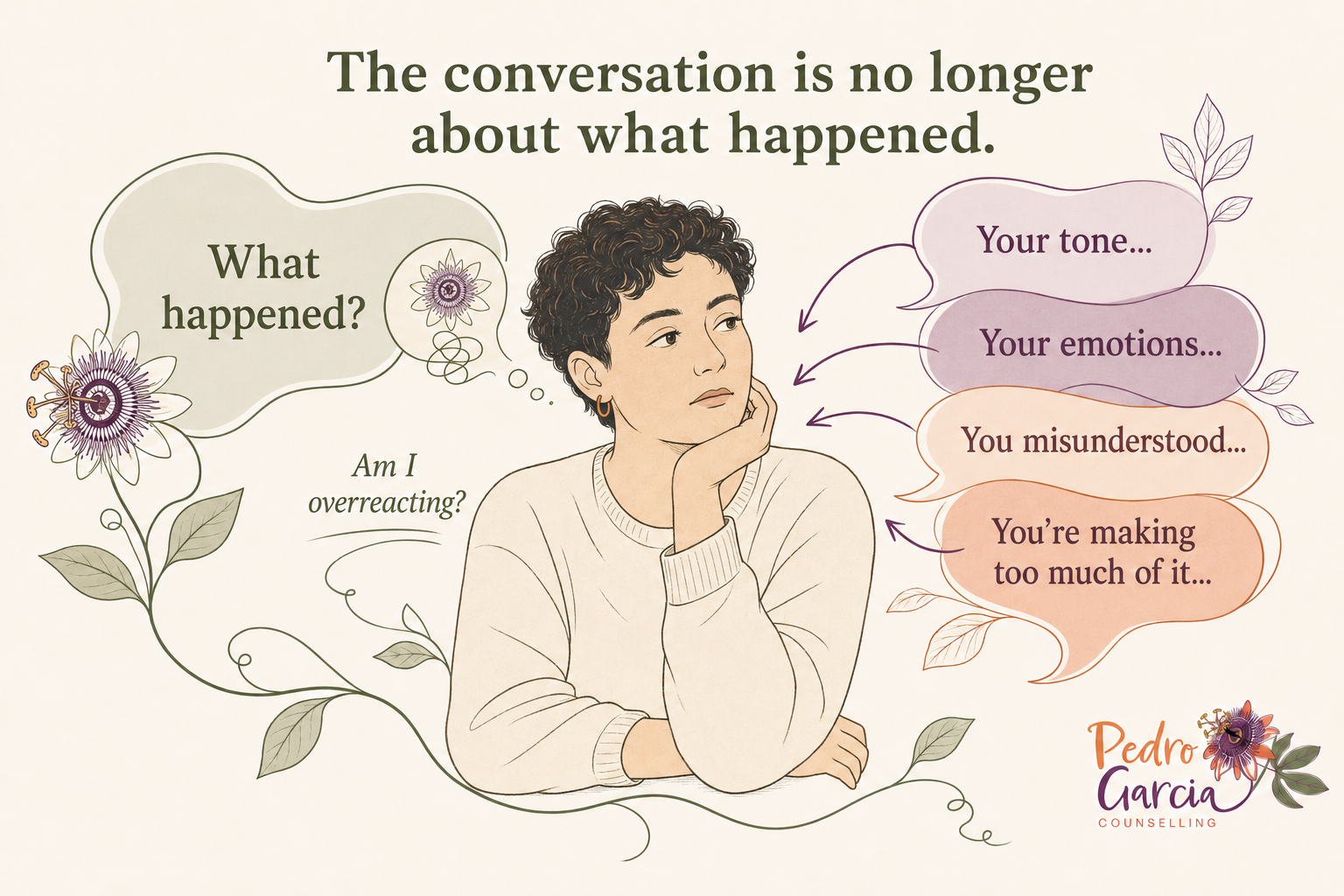
When a concern becomes a judgement about your reaction, self-doubt can quickly take over.
This pattern can appear in many parts of our lives.
You tell your partner that something they said hurt you. They respond by saying that you are trying to start an argument.
You question a decision at work. Rather than answering your question, someone describes your approach as confrontational.
A family member repeatedly ignores a boundary. When you finally become frustrated, everyone focuses on the intensity of your response.
…..
These situations may begin with something relatively ordinary. What makes them harder is what happens next.
You feel misread. So you try harder to explain.
You provide more context. You clarify what you meant. You repeat that you are not trying to attack anyone or get your own way.
But the harder you try, the more difficult you seem to them.
Now you are trapped.
The Anger–Credibility Trap
I think of this pattern as the Anger–Credibility Trap.
It often develops like this:
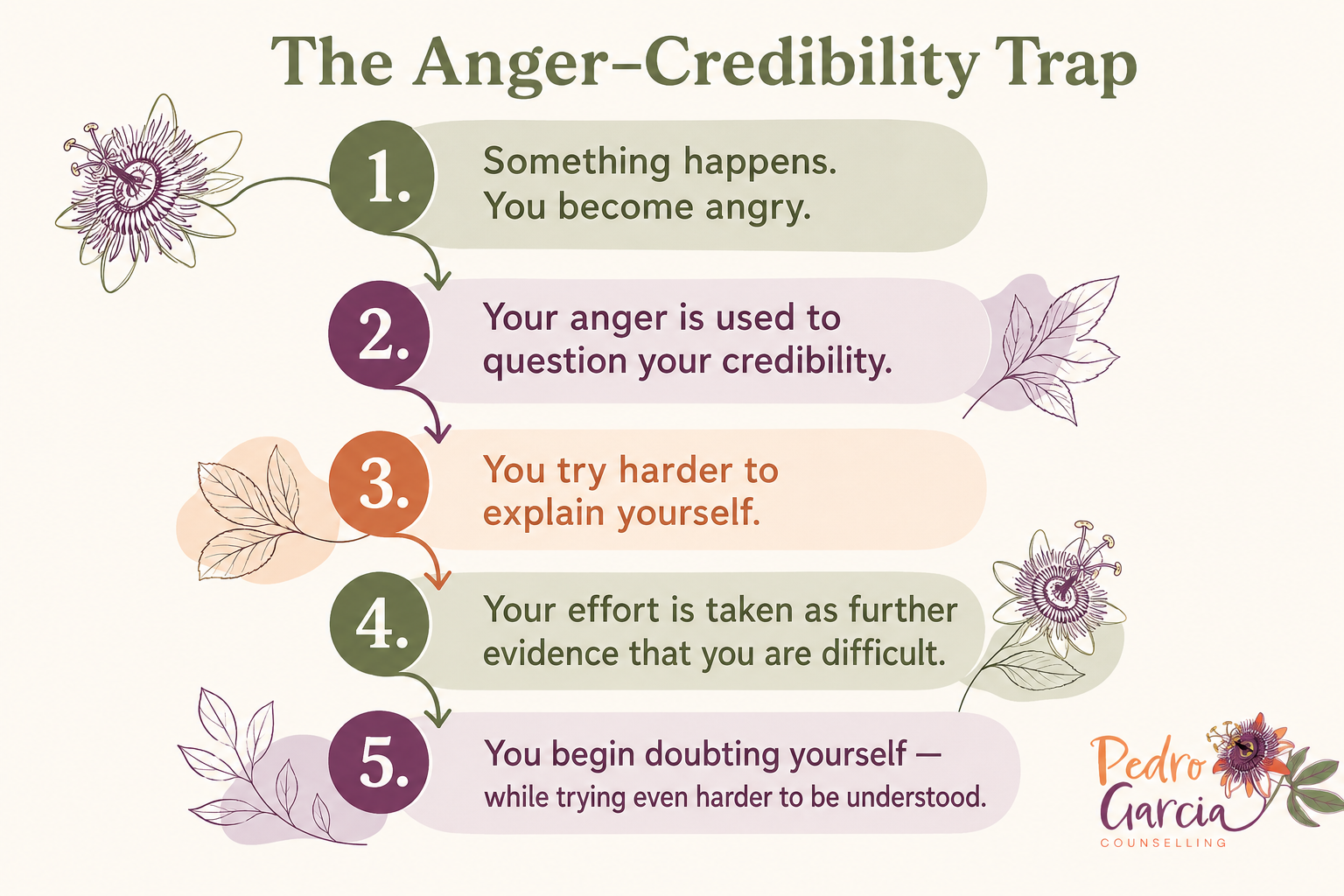
How the Anger–Credibility Trap develops. A framework by Pedro Garcia Counselling.
The original issue has still not been resolved. But now there is a second issue: the story being created about who you are and what you intended.
Perhaps you were asking for clarity, but you are treated as demanding. You were naming something that hurt, but you are described as dramatic. You were challenging a decision, but your disagreement is interpreted as aggression.
You may find yourself wanting to say:
That isn’t what I meant…
That isn’t what I was asking for…
That isn’t who I am…
This is why the anger can become so consuming. You are no longer only addressing what happened. You are also trying to protect your credibility.
The pressure to remain reasonable
Once you enter this trap, you may feel that you have to remain exceptionally calm.
You choose every word carefully. You soften what you say. You acknowledge the other person’s position. You may even reassure the person whose behaviour affected you.
You know that any visible anger could be used as evidence that you really are difficult, aggressive, dramatic or “too much.”
Taking time to regulate ourselves can help us think more clearly. But regulation is not the same as suppression:
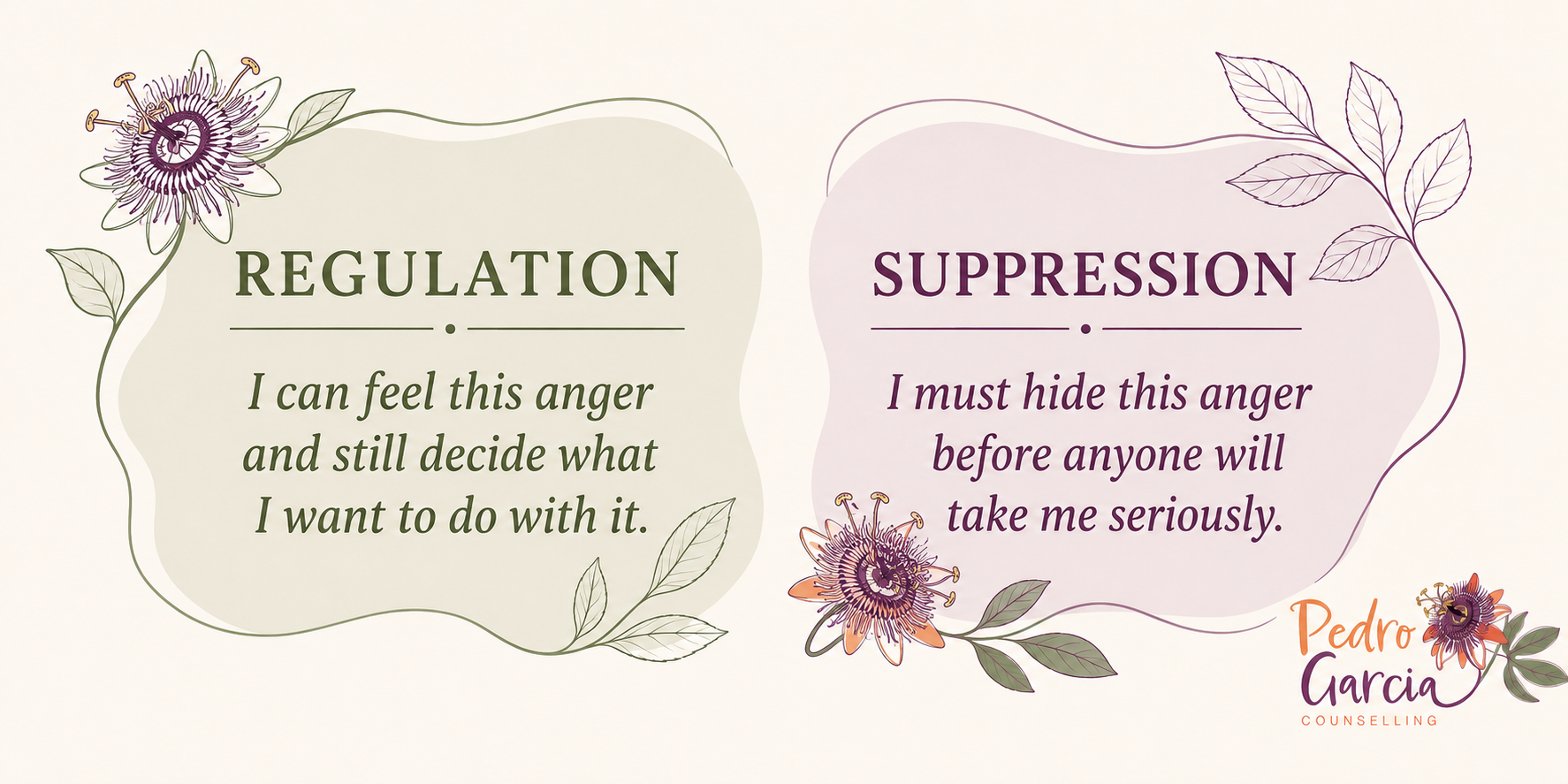
Regulation allows us to feel anger and choose our response. Suppression asks us to hide it to remain acceptable.
When calmness becomes something we must perform to remain credible, it carries a cost. We address the original problem while constantly monitoring ourselves.
Are my words too direct? Am I explaining too much? Will they describe me as confrontational?
On the outside, we may appear composed. Inside, we replay the conversation and search for the explanation that will finally make the other person understand.
Why can’t I let it go?
You may know that disengaging would be easier. You could end the conversation, accept what has been offered or decide that it is not worth the emotional energy.
But something in you resists. Sometimes, letting go can feel like agreeing with what happened.
Beneath the Anger–Credibility Trap, there may be a form of dignity anger: the part of you insisting that your experience, intentions and boundaries matter.
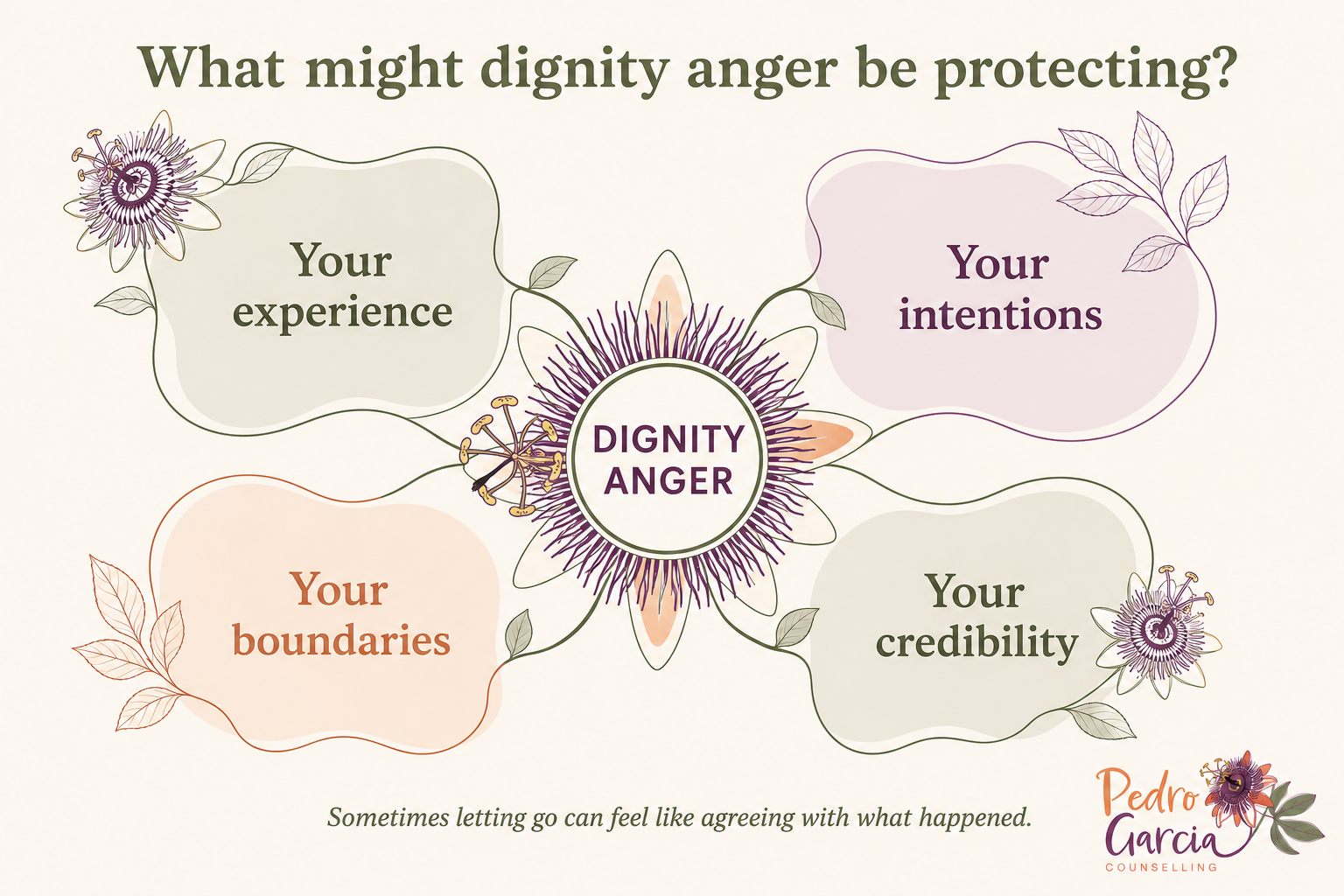
Dignity anger may be protecting your experience, intentions, boundaries and credibility.
Dignity Anger may be saying:
I do not want someone else to decide what my intentions were…
I should not have to fight this hard for an explanation…
I do not want to accept this simply because challenging it is uncomfortable…
When there has been no acknowledgement, accountability or repair, letting go may feel like agreeing with what happened. It may even feel like accepting an untrue version of yourself.
This does not mean that you must continue every argument until someone admits you were right. But it can help explain why walking away is not always emotionally simple.
Who feels permitted to show anger?
For some people, monitoring how they express anger is not new, as we learn to make our anger small, tidy and easy for others to receive.
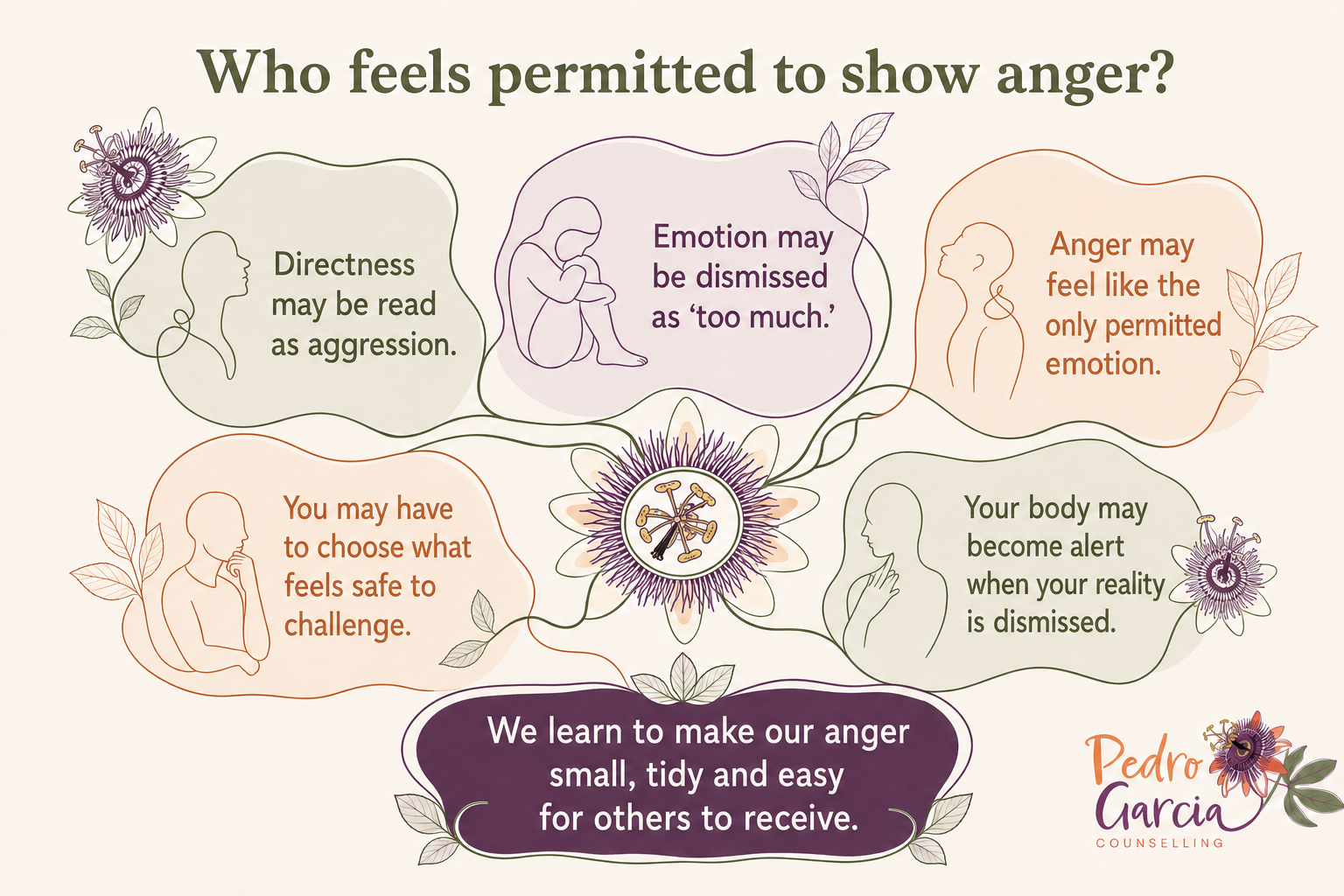
Different experiences can shape whether showing anger feels acceptable or safe.
A neurodivergent person may worry that direct communication will be interpreted as rudeness or aggression. An LGBTQIA+ person may have become highly aware of when it feels safe to challenge other people’s assumptions. A woman may fear being dismissed as emotional or confrontational.
Someone from a minoritised background may have spent years deciding which comments to challenge and which to absorb because they do not want to be labelled difficult.
Someone with a history of trauma may notice their body becoming alert when their reality is dismissed, even while another part insists that the situation is not serious enough to justify such a strong response.
These experiences are not identical. But they can all make us highly aware of how other people perceive us. We may learn to hide not only parts of our identity, but also our discomfort.
We try to make our anger small, tidy and easy for other people to receive.
Your anger is not the whole story
Recognising the Anger–Credibility Trap does not mean assuming that we are always right.
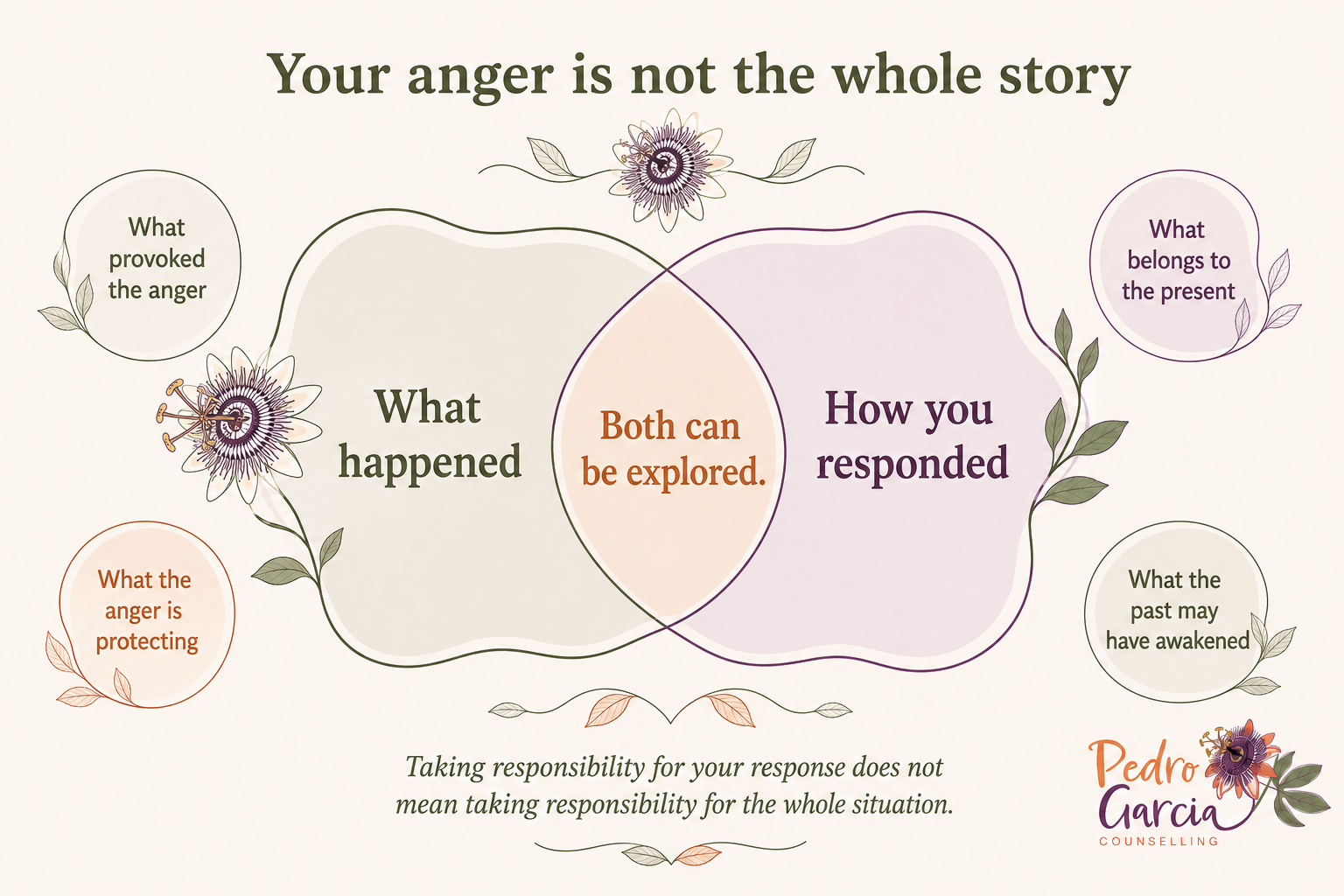
We can explore what happened and how we responded without allowing either to cancel out the other.
We may have spoken from a highly activated place. There may be parts of our response we would now express differently. An experience from the past may have been awakened alongside what happened in the present.
But reflecting on our reaction does not require us to dismiss what provoked it.
Both can be explored.
We can take responsibility for how we respond without accepting responsibility for the entire situation. We can consider another person’s perspective without allowing it to define our intentions.
In Part Two, I will explore what happens beneath dignity anger, and how we can listen to it without silencing ourselves or allowing it to decide everything we do.
Has this article resonated with you?
Counselling can offer a space to explore these experiences without having to defend them first. We can look at what your anger may be protecting, why certain situations remain so active, and how shame, identity, trauma, masking or earlier experiences may shape the way you respond.
I’m Pedro, a BACP-registered counsellor offering therapy in English and Spanish, online and in person in London Bridge and Greenwich. My work is trauma-informed, neurodivergence-aware and LGBTQIA+ affirming.
You’re welcome to arrange a free 20-minute clarity call if you’d like to ask questions, tell me a little about what you’re looking for, and see whether working together feels right. There is no pressure to continue afterwards.
Would you like to know a little more about me and how I work?
Choosing a counsellor can feel personal. You may want to understand more about my approach, the values that shape my work, and what you could expect from therapy with me before deciding whether to get in touch.