
We tell people to speak. But what happens when they do?
Why I’ll be wearing a blue ribbon for the National Day of Awareness for Childhood Sexual Abuse
We tell people to speak.
Tell someone. Ask for help. Don’t carry it alone.
Of course that matters.
But after almost four years of working alongside families impacted by childhood sexual abuse, I keep coming back to another question…
……..What happens when they do?
I started this work knowing that childhood sexual abuse would be difficult to talk about.
What I understood much less was how much can happen after someone speaks, and how much families may have to carry while trying to work out what comes next.
Almost four years later, I see some of it very differently…
And perhaps one of the biggest things I have learnt is that asking someone to speak also asks something of the person listening. If we encourage people to speak, we also have a responsibility to think about how we listen when they do.
The Listening Gap
We encourage people to disclose, to speak and to ask for help.
But listening is harder than asking someone to talk.
Childhood sexual abuse makes people uncomfortable, understandably so. It can bring horror, anger, disbelief, fear, helplessness…
Sometimes we try to make the situation more manageable….
Sometimes we move quickly towards what could happen next before we have really understood what it is like for the person living through it…
Sometimes we hand the conversation to “the professionals” because surely somebody else will know what to do…
But if we can’t listen to what is happening, how are we supposed to understand it?
And if we don’t understand it, how do we change it?
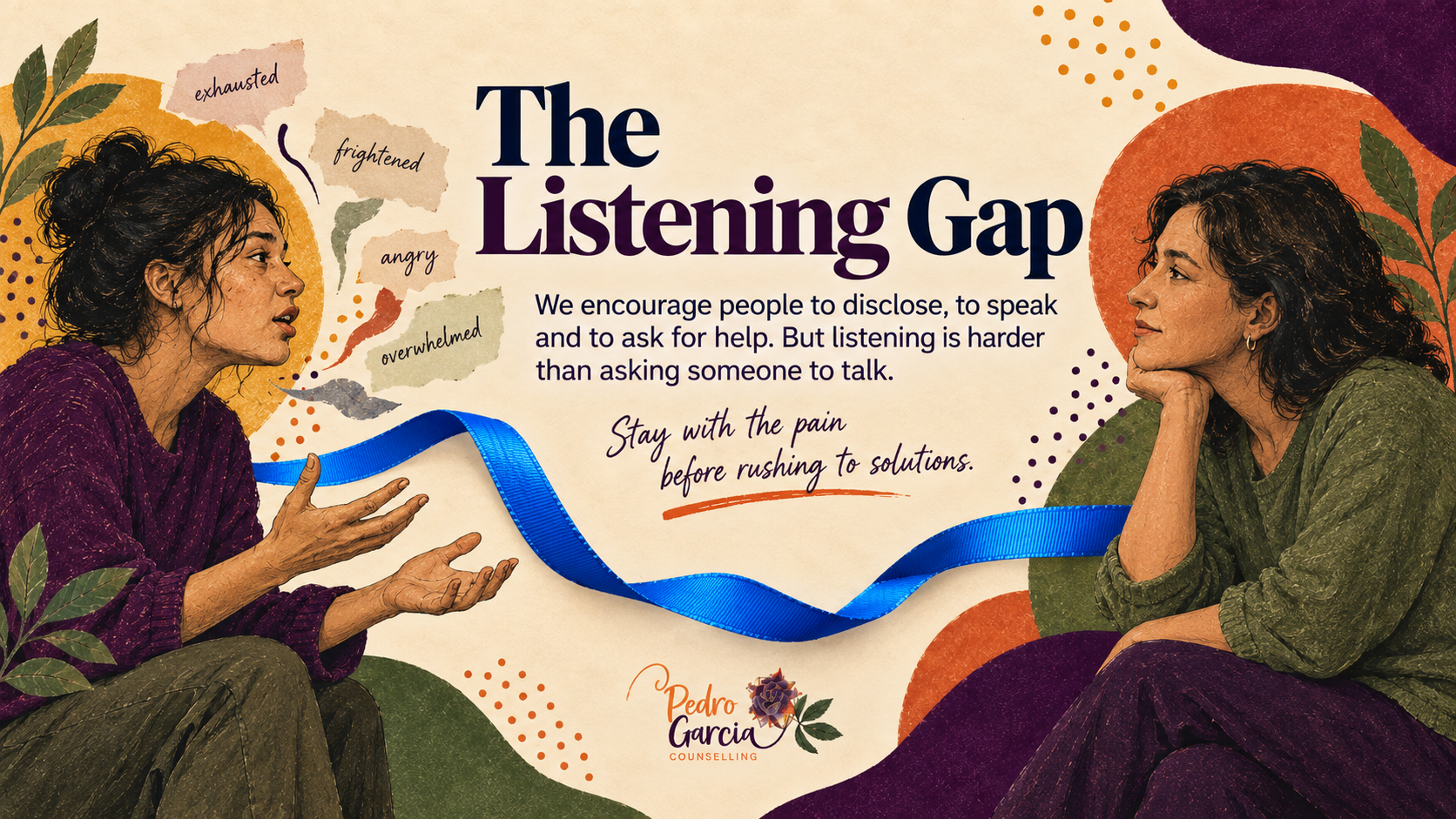
The Listening Gap: encouraging people to speak is only the beginning. Listening means making space for what they are carrying before rushing towards solutions.
One of the things I have noticed when supporting families impacted by Child Sexual Abuse is how isolating the experience can become.
There are moments when we have to sit with pain and anger because those feelings are not necessarily the problem. They can be a completely understandable response to something frightening, unjust, or outside somebody’s control.
Trying to move someone away from those feelings too quickly can become another way of not really listening.
There are moments when I would love to be able to say, this is what will happen next and everything will be okay
But sometimes I can’t…
Sometimes the most honest thing I can do is acknowledge that something is painful because the situation itself is painful.
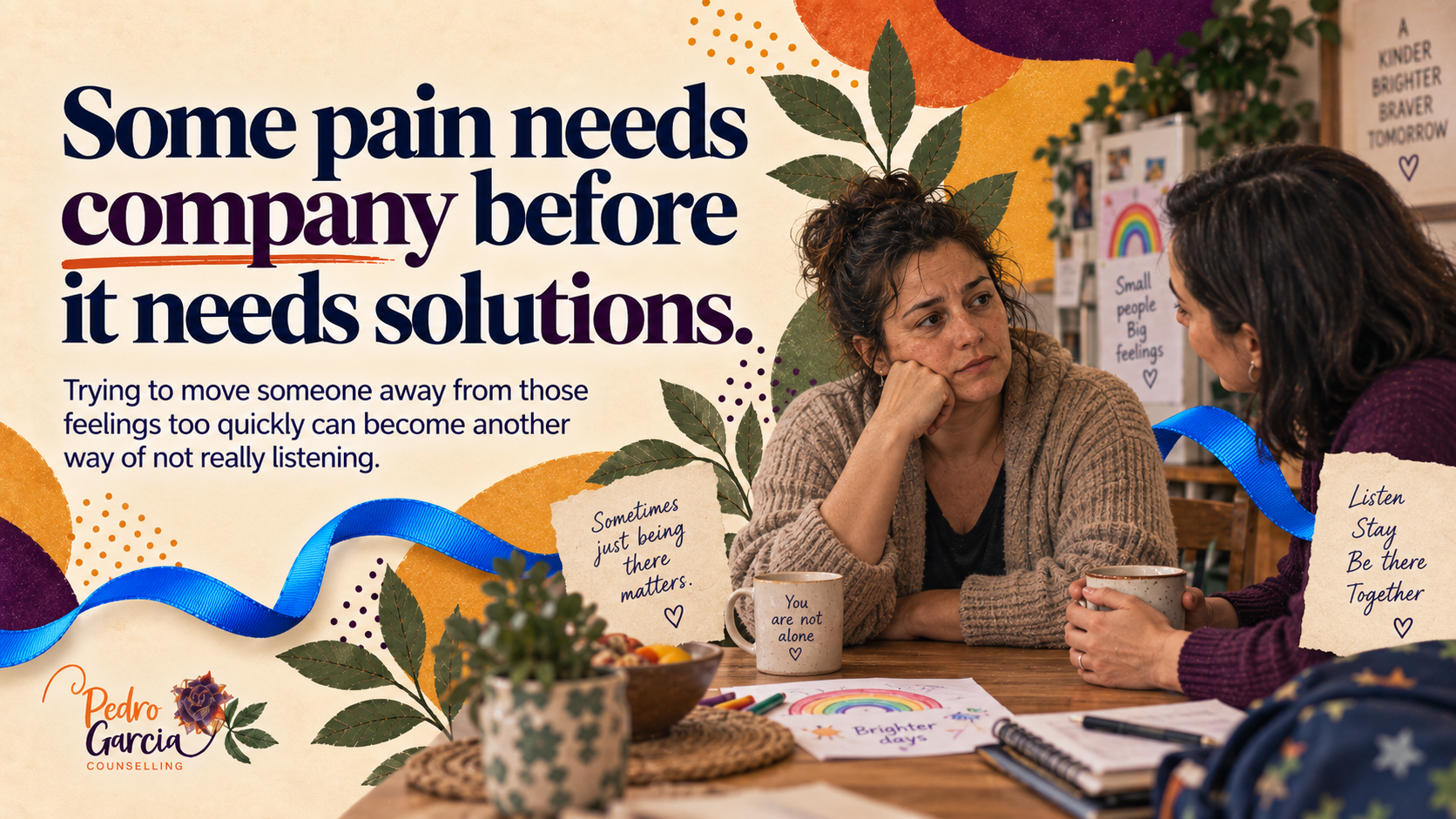
Some pain needs company before it needs solutions. Support can sometimes mean staying with someone’s experience rather than trying to move them away from it too quickly.
I used to think disclosure meant help would begin.
I really did.
I thought that once somebody disclosed abuse, the next challenge would be getting them to the right support. Professionals would know what to do. There would be a system. Help would begin.
Not anymore.
Disclosure can lead to good support, but it can also open the door to police, schools, social services, medical appointments, family court and the criminal justice system.
Different professionals, different processes, different decisions.
And somewhere inside all of that is a family who may already be exhausted.
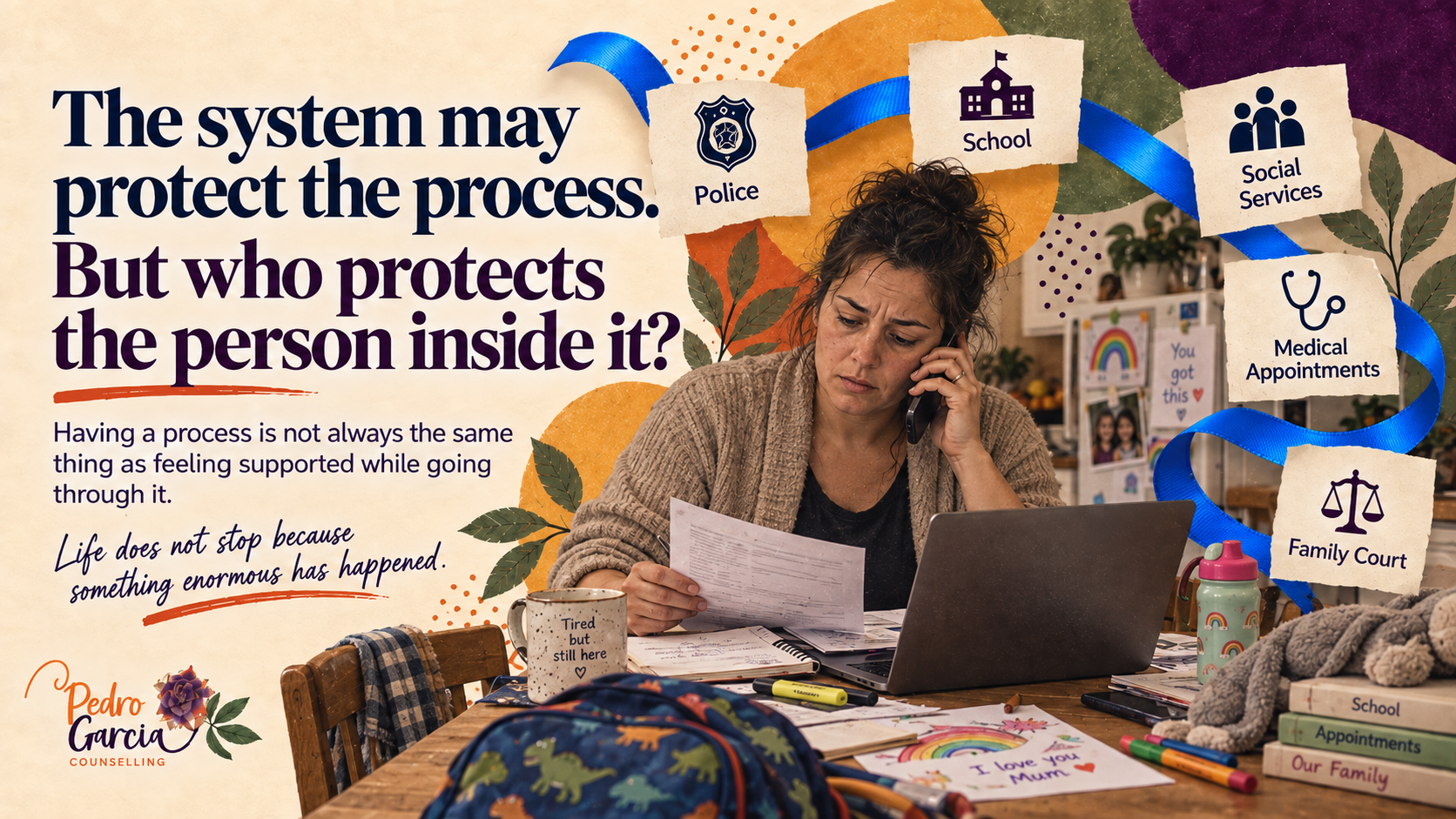
The system may protect the process, but who protects the person inside it? Families can be navigating multiple services while ordinary life, parenting and responsibility continue around them.
Having a process is not always the same thing as feeling supported while going through it.
Families can still be frightened. They can still feel alone. They can still be trying to understand what is happening while going to work, looking after their children, making dinner, answering emails, getting somebody to school and somehow continuing with ordinary life.
And sometimes the very systems they turn to for protection can add another layer of distress, asking them to repeat what happened, wait for decisions, explain themselves again, or keep moving through processes while they are still trying to make sense of what has happened.
For some families, those processes can become retraumatising in themselves, particularly when they involve repeated telling, uncertainty, long waits or feeling unheard.
The system may protect the process… But who protects the person inside the process?
…Speaking is not the end of the story.
We cannot protect what we refuse to see
Childhood sexual abuse can be easier to imagine as something distant, happening somewhere else, to another family or in another community.
Perhaps that distance makes the subject easier to live with.
But it also makes it easier not to look.
Visibility interrupts that.
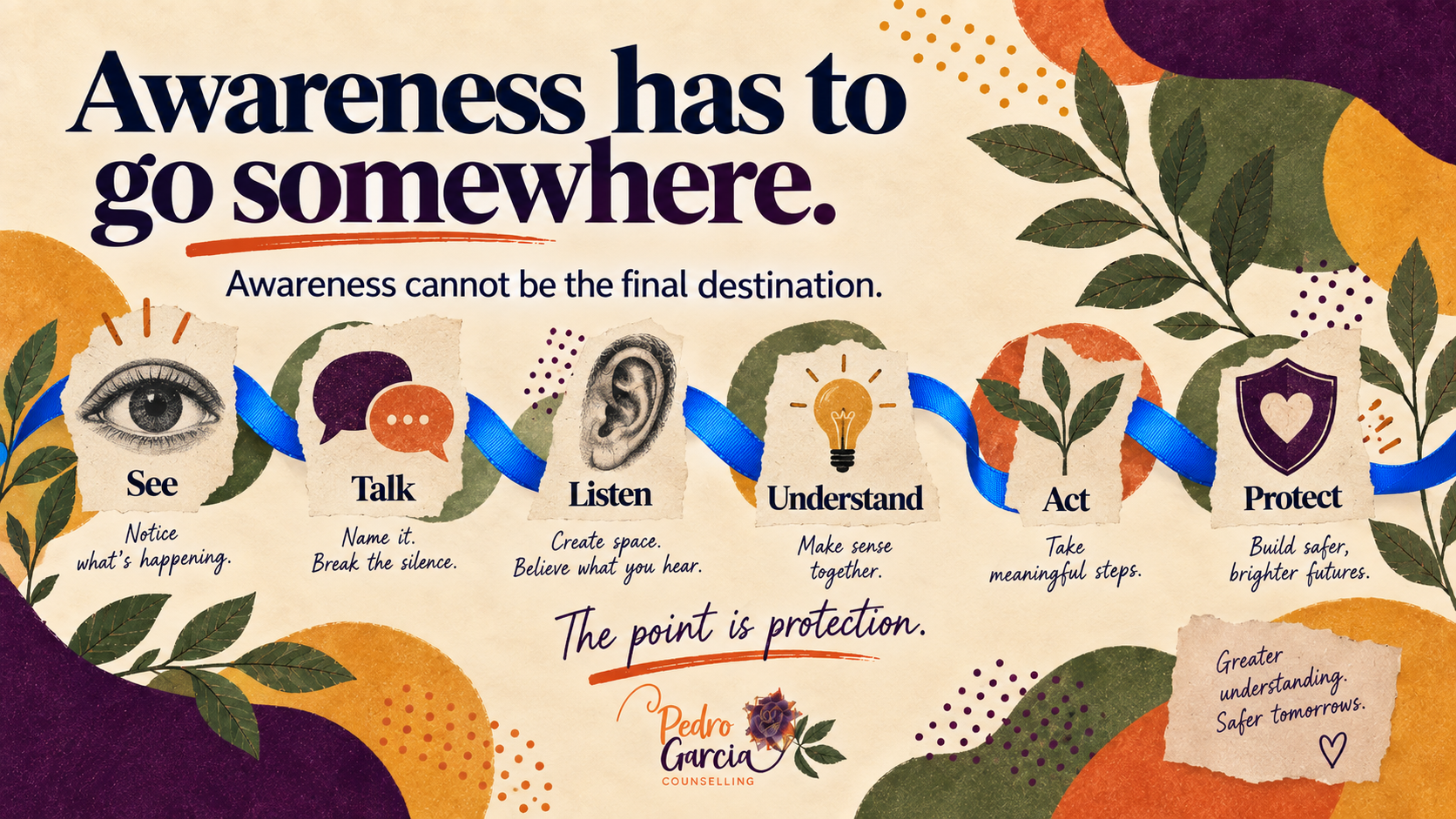
Awareness has to go somewhere. Seeing and talking create the possibility of listening, understanding and meaningful action, with protection as the destination.
This does not mean victims and survivors of Child Sexual Abuse should have to make their experiences public so the rest of us will pay attention. Awareness should never depend on somebody exposing their pain.
The responsibility cannot sit with them.
Visibility can also mean the rest of us becoming more willing to name the issue, learn about it, listen, and notice what makes us uncomfortable.
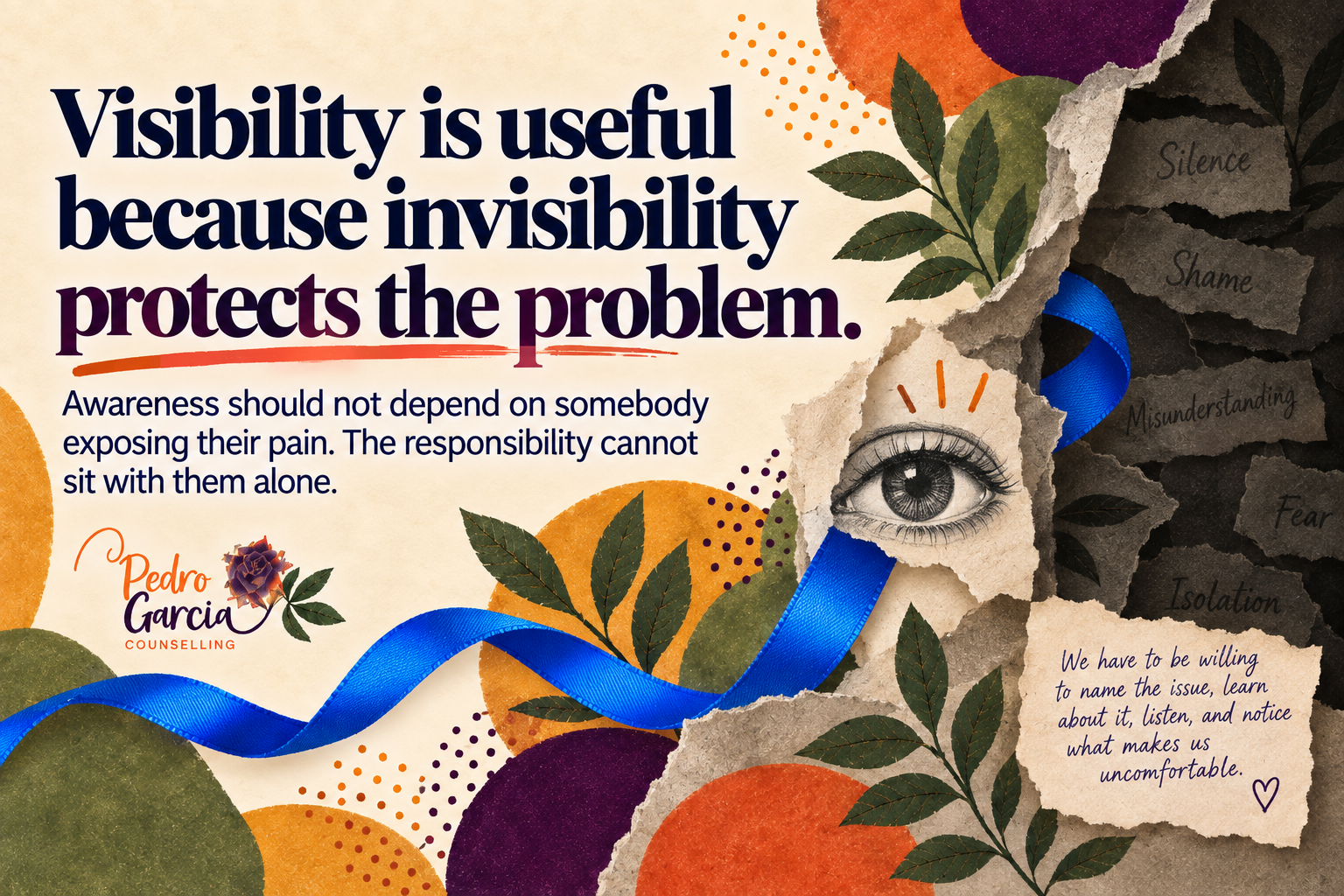
Visibility matters because invisibility can protect the problem. Awareness should not depend on victims and survivors exposing their pain: the responsibility to notice, learn and speak belongs to all of us.
Because childhood sexual abuse is not only something we should think about once somebody tells us it has happened.
If we want to protect children, we have to be able to think about it before then too.
Visibility also matters because shame has an extraordinary ability to travel in the wrong direction.
Children can carry it. Victims and survivors can carry it.
And suddenly the people living with the consequences are also carrying responsibility for them.
That is why one of the central messages from the National Day campaign feels so important to me:
The shame belongs with the person who chose to abuse. Never with the person who was abused.
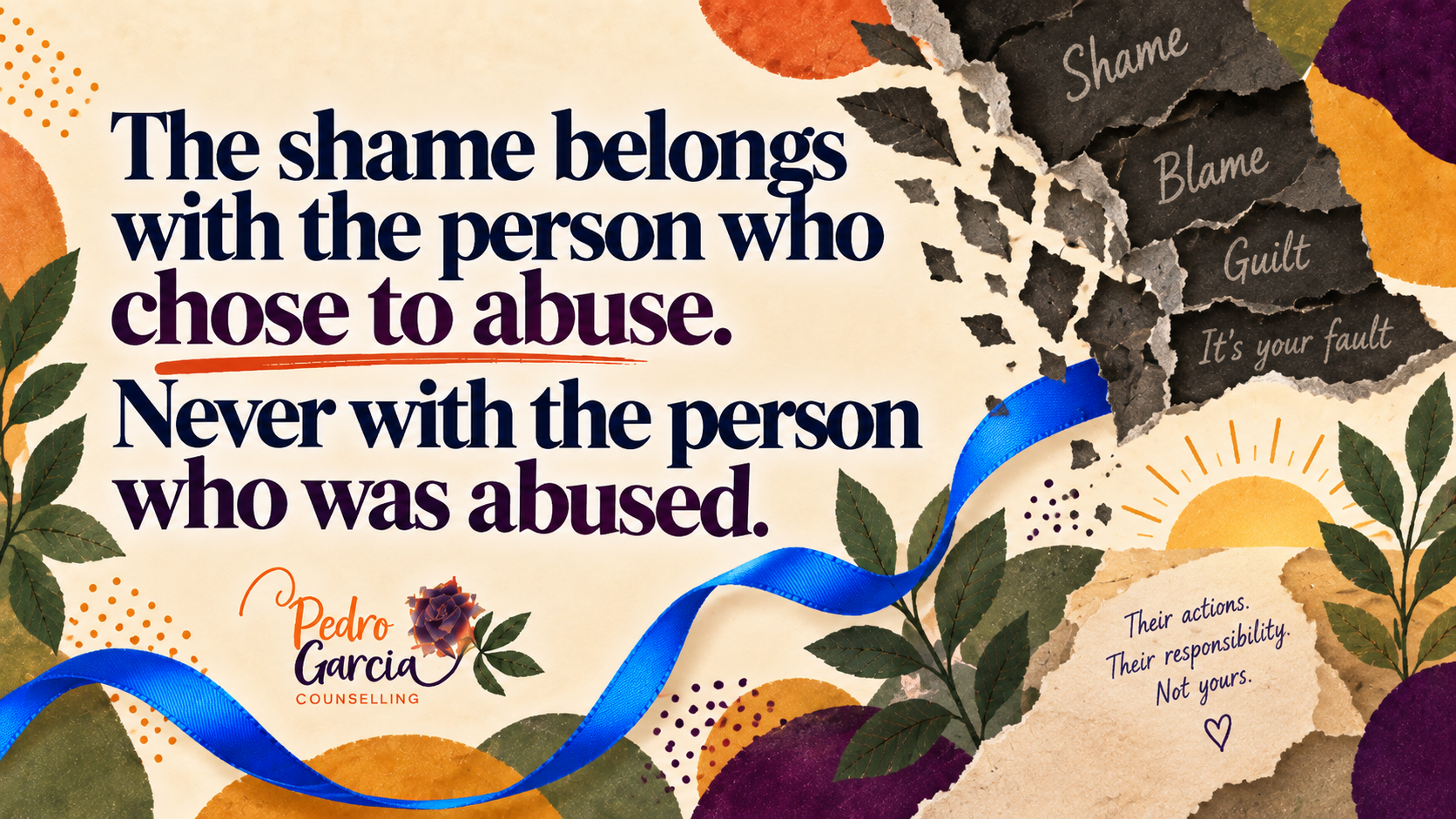
Responsibility sits with the abuser, not with the victim or survivor.
But awareness cannot be the final destination.
Otherwise we wear blue, share something online, feel sad or angry for a moment, and then carry on.
Awareness has to go somewhere.
For me, the movement looks something like this:
See → Talk → Listen → Understand → Act → Protect
We have to see something before we can properly talk about it. Talking creates the possibility of listening. Listening helps us understand what victims, survivors and families impacted by Child Sexual Abuse are telling us. Understanding gives us something to act on.
And ultimately, the point is protection.
Not simply knowing that childhood sexual abuse exists, but becoming better at recognising it, responding to it and protecting children.
Why I’ll wear the blue ribbon
So on Wednesday, I will wear a blue ribbon.
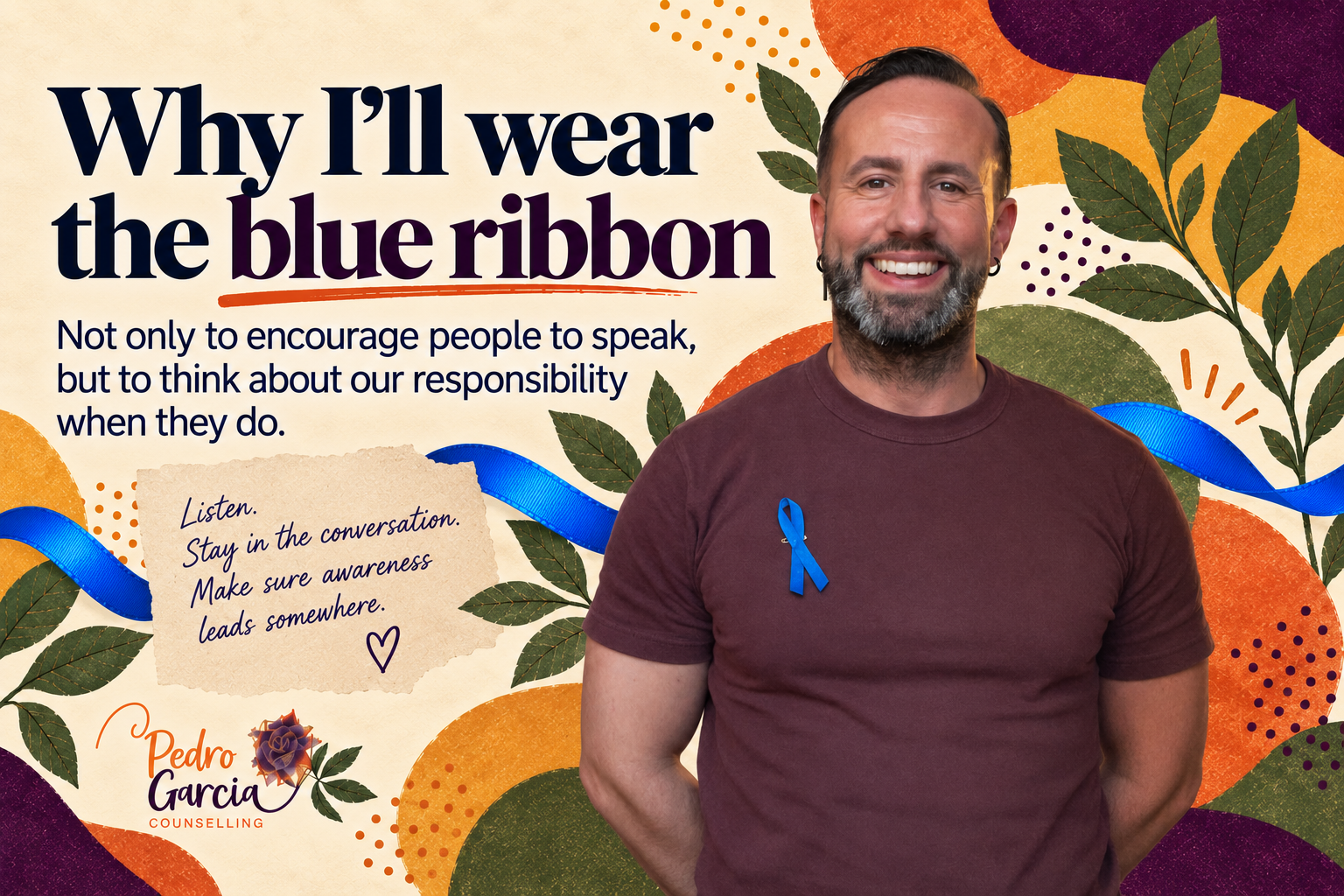
Why I’ll wear the blue ribbon: not only to encourage people to speak, but to think about the responsibility we have when they do. To listen, stay in the conversation and make sure awareness leads somewhere.
After almost four years of working with families impacted by Child Sexual Abuse, it means something quite concrete to me.
It reminds me of families trying very hard to do the right thing when there may be no perfect decision. Of guilt sitting alongside love, anger sitting alongside fear, and resilience that does not always look particularly heroic.
Sometimes resilience is making another phone call when you are exhausted, turning up to another meeting, getting somebody to school, asking the same question again because you still do not have an answer, making dinner, and somehow continuing with ordinary life when life no longer feels ordinary.
It also reminds me of something I have learnt about support.
We do not always need to know exactly what to say.
Sometimes we have to listen.
Sometimes we have to stay.
Some pain needs company before it needs solutions.
Perhaps that is part of what this National Day is asking from us too.
Not only to encourage people to speak, but to think about the responsibility the rest of us have when they do.
To listen.
To stay in the conversation.
And to make sure awareness leads somewhere.
See. Talk. Listen. Understand. Act. Protect.
This is the first of two reflections on what almost four years of working alongside families impacted by childhood sexual abuse has taught me. In the second, I want to look more closely at what happens when families speak, enter systems designed to protect them, and still do not feel protected.
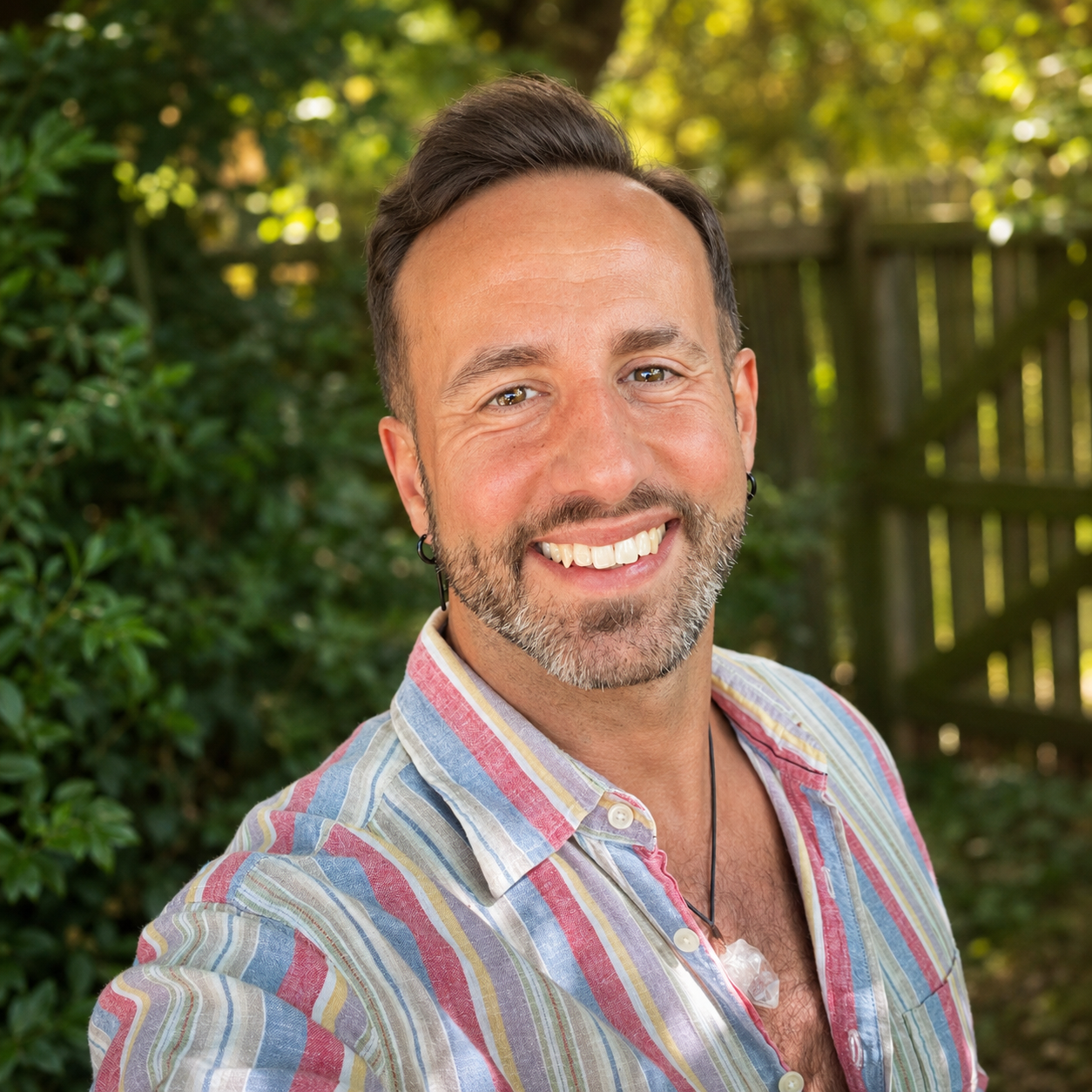
About Pedro
I am a counsellor in private practice in London. Alongside my counselling work, I have spent almost four years working with parents and carers impacted by childhood sexual abuse. A lot of what I have written here comes from what that work has taught me about disclosure, the systems families can find themselves navigating afterwards, and how important it can be to listen before rushing towards solutions.